In this article
- Introduction
- What Is a BarberReceptionist and How Does It Work?
- Why Barbershops Need 24/7 Appointment Booking
- How BarberReceptionist Handles Bookings 24/7
- Benefits of Using an AI Receptionist for Barbers
- How an AI Receptionist Helps Fill Empty Appointment Slots
- BarberReceptionist vs. a Traditional Barbershop Receptionist
- How to Set Up BarberReceptionist in Your Barbershop
- Is a BarberReceptionist Right for Your Barbershop?
- Start Handling Barbershop Bookings Around the Clock
- Conclusion
- FAQs
Introduction
A barbershop gets busy fast, and answering every call while you're mid-cut isn't realistic. Appointment requests go to voicemail, callers try the next shop, and you find out hours later — if at all.
This post is about how BarberReceptionist handles that specific gap: answering calls around the clock, booking into your calendar, and dealing with changes, without pulling you away from the chair.
If you're still comparing the category rather than looking at one product, receptionist software for barbershops is the better starting point, and the pillar guide to barbershop AI receptionists covers the ground more broadly.
What Is a BarberReceptionist and How Does It Work?
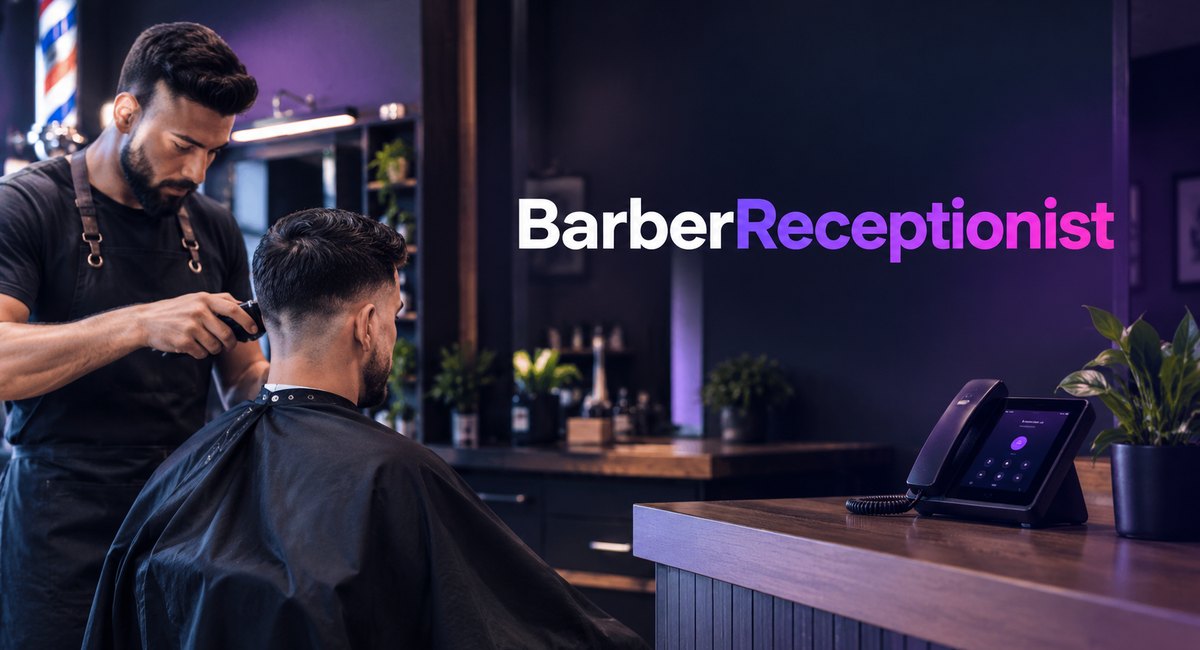
It's a receptionist for your phone line that doesn't need a chair, a shift, or a break. When someone rings, it answers, works out what they want, and acts on it.
What it says comes from what you configure: your services, your prices, your opening hours, and who works when. It answers questions about those, checks real availability, and books appointments. It also handles rescheduling and cancellations by phone, so a change frees the slot instead of leaving a gap you discover on the day.
It isn't a generic answering service with barbershop words added. It understands fades, beard trims, and combined services, and it books into Google Calendar — appointments land as ordinary events on your phone rather than in a system you have to remember to open.
Why Barbershops Need 24/7 Appointment Booking
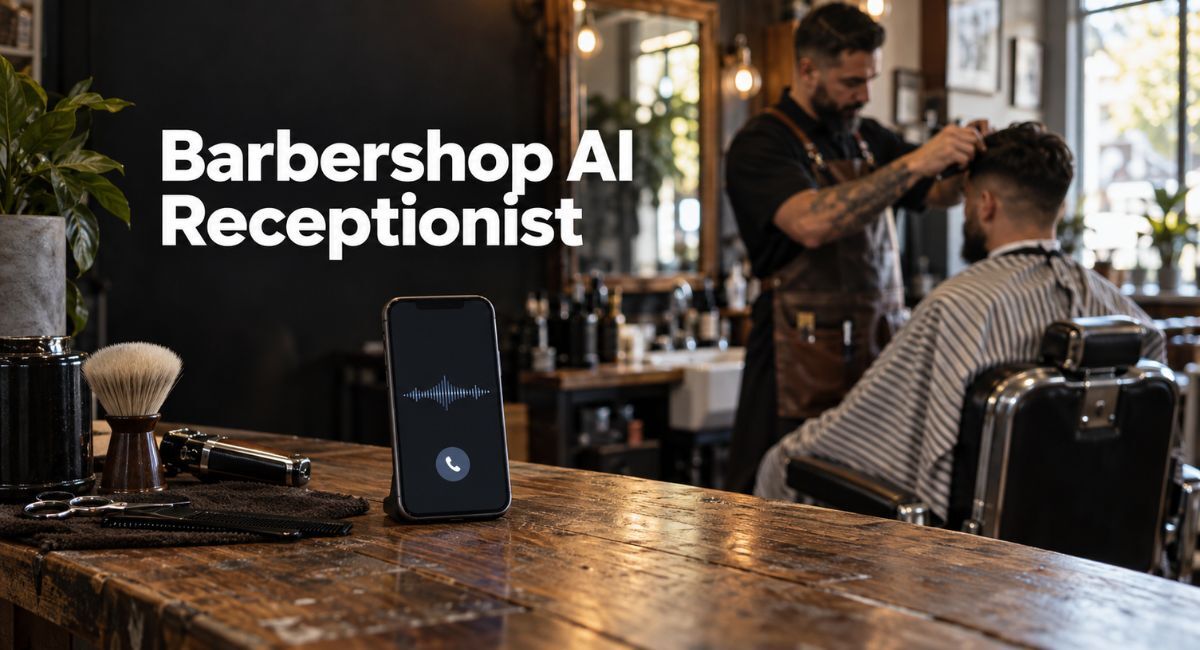
You're halfway through a haircut and the phone rings. You can't stop, so the caller hangs up and tries somewhere else. That happens several times a week, and more at weekends.
The second problem is quieter. People don't only ring during opening hours — someone remembers they need a cut at 10pm, or on the way to work. If nobody answers then, most won't try twice. That demand never shows up in your missed-call list as anything you'd recognise as lost business.
Round-the-clock answering closes both gaps. It matters most for new clients, who have no reason to persist with a shop that didn't pick up.
How BarberReceptionist Handles Bookings 24/7
Answer client calls while you work
The phone gets answered while your hands are busy. The caller explains what they need and gets a real answer, not a voicemail beep — which is the difference between a booking and a shrug.
This matters most at peak hours, when several people ring close together. You stay with the client in your chair and the routine calls get handled alongside you.
Help clients book appointments
Nobody should need three calls to arrange a haircut. The receptionist walks the caller through what it needs — service, barber, time — checks genuine availability, and books it.
Someone rings on Saturday wanting a cut that afternoon. It checks what's actually open, offers the times that exist, and confirms the details back before saving. No double bookings, because it's reading the same calendar you are.
Answer questions about services and pricing
"How much is a skin fade?" "Do you do beard trims?" "What time do you close?" Individually trivial, collectively a real tax on your attention.
Those come from your configured service list, so the answers stay consistent. If you run Square, services and prices sync from the catalogue you already maintain, which means one less list to keep in step. Keep the details current whenever prices change — stale information is the most common source of a wrong answer.
Support rescheduling and cancellations
Plans change. Work runs late, something comes up, and the appointment needs moving.
Callers can reschedule or cancel by phone, and the calendar updates with them. That's the part many tools leave out, and it matters more than it sounds: a cancellation that goes through the system releases the slot, while one that doesn't is just an empty chair you learn about when nobody arrives.
Benefits of Using an AI Receptionist for Barbers
The clearest benefit is fewer interruptions. You stop switching between the phone and the person in front of you, and the quality of both improves.
The second is consistency. Every caller gets the same answer about your prices and hours, at 9am or 9pm, whether it's your busiest Saturday or a quiet Tuesday.
For a shop without a dedicated front desk — which is most shops — it covers the administrative layer that otherwise lands on whoever is nearest the phone. It won't make your haircuts better or replace the relationships you have with regulars. It handles the admin around them.
How an AI Receptionist Helps Fill Empty Appointment Slots
Empty slots hurt most when they appear at short notice, and you usually don't notice straight away because you're working.
Two things help. First, a caller who would have reached voicemail gets booked instead, which keeps them from ringing your competitor. Second, cancellations get recorded properly when they happen, so you can see a gap while there's still time to do something about it.
No system fills every gap, and anything promising otherwise is overselling. Better call handling just means more of your schedule reflects what's genuinely available.
BarberReceptionist vs. a Traditional Barbershop Receptionist
A person brings judgement. They read a complaint, handle an awkward walk-in, and deal with the situations nobody wrote a rule for. That's genuinely valuable and automation doesn't replicate it.
The trade-offs are the obvious ones. A front-desk hire is a salary, a schedule, holiday cover, and recruitment — and they still can't answer the phone while serving someone at the counter.
| Front-desk hire | BarberReceptionist | |
|---|---|---|
| Hours covered | Their shift | All of them |
| Cost shape | Salary plus overheads | Fixed monthly |
| Routine calls | Yes, when free | Yes, always |
| Complaints and judgement calls | Yes | No |
| Walk-ins at the counter | Yes | No |
The honest answer is that they do different jobs. Plenty of shops will want both eventually; most start by covering the calls that currently go unanswered.
How to Set Up BarberReceptionist in Your Barbershop
- Write down what people actually ask. Services, prices, opening hours, location, and your booking rules. This is the brief, and the quality of the answers depends entirely on it.
- Connect your calendar so availability is real rather than assumed.
- Decide your rules — how far ahead people can book, what happens with cancellations, which situations you want to handle yourself.
- Test it like a client. Ring it yourself, after hours, on a mobile. Book a cut and a beard trim together. Ask for a barber who's off that day. Cancel something and check the slot reopens.
- Review the first week and fix whatever produced a confusing answer.
Every account starts with 15 free minutes and no card required, which is enough to run exactly those tests before committing to anything. You can also hear recorded sample calls first — three real shops, three different conversations.
Is a BarberReceptionist Right for Your Barbershop?
It's a good fit if you regularly miss calls mid-cut, get booking requests outside opening hours, or answer the same five questions all day. That describes most owner-operated shops and small teams.
It's a poor fit if your phone barely rings. Automation captures demand that already exists — it doesn't create it. If the problem is that not enough people are calling, this is the wrong tool and stop losing money on barbershop bookings covers the other levers.
Worth knowing before you decide: when a caller asks something outside what you've configured, the receptionist declines politely and stays within what it was given rather than guessing. That's deliberate — it won't invent a price or promise a service you don't offer — but it does mean the brief needs to be complete, and anything genuinely unusual still needs you.
Start Handling Barbershop Bookings Around the Clock
Your clients shouldn't have to wait until you finish a haircut to ask about an appointment.
Start by naming the calls that cost you most — the after-hours ones, or the mid-cut ones — and set it up against those first. Keep your services and hours accurate, test it the way a client would use it, and judge it on confirmed appointments rather than on how it sounds.
For the mechanics of what happens during a call, AI call agent for barbershops goes deeper, and AI for barbers covers which jobs are worth automating at all.
Conclusion
Managing calls shouldn't compete with cutting hair. BarberReceptionist answers the phone around the clock, books into your calendar, handles changes, and keeps your service information consistent — so the admin stops landing in the middle of a fade.
It won't fix a quiet shop or replace the judgement a person brings to an awkward situation. What it does is make sure the people trying to reach you actually get through, which is usually where the bookings were going missing.
FAQs
What is a BarberReceptionist?
An AI receptionist for barbershops that answers customer calls, responds to questions about your services and hours, and books appointments into your calendar.
Can it book barber appointments 24/7?
Yes. It answers and books around the clock, including after you close, using the availability in your connected calendar.
Can it answer questions about barber services and pricing?
Yes, once your services, prices, business hours, and location are configured. If you use Square, services and prices sync from your existing catalogue.
Can it reschedule or cancel appointments?
Yes. Callers can change or cancel by phone and the calendar updates with them, so a cancelled slot frees up instead of sitting empty.
Can it help reduce missed bookings?
It answers calls you would otherwise miss while cutting or after closing, which captures booking requests that would have gone to voicemail.
Is it suitable for a small barbershop?
Yes. It suits owner-operated shops and small teams where nobody is free to answer the phone, though it only helps if your phone already rings.