In this article
- Introduction
- What Is a Virtual Receptionist for Barbers?
- Why Barbershops Need a Virtual Receptionist
- How a Virtual Receptionist Works
- Virtual Receptionist vs Traditional Receptionist
- What to Look For in a Virtual Receptionist Service
- How BarberReceptionist Helps Barbers Manage Calls
- Is a Virtual Receptionist Worth It for a Small Barbershop?
- How to Get Started
- Conclusion
- FAQs
Introduction
Running a barbershop keeps you busy, and answering every call while cutting hair isn't always possible. When someone rings to book and nobody picks up, they often just try the next barber on the list.
A virtual receptionist handles those calls for you: answering common questions, explaining your services, and taking bookings without interrupting the cut you're in the middle of.
This guide covers what one actually does, where it helps, what it costs, and how to judge whether it's worth it for a shop your size.
What Is a Virtual Receptionist for Barbers?
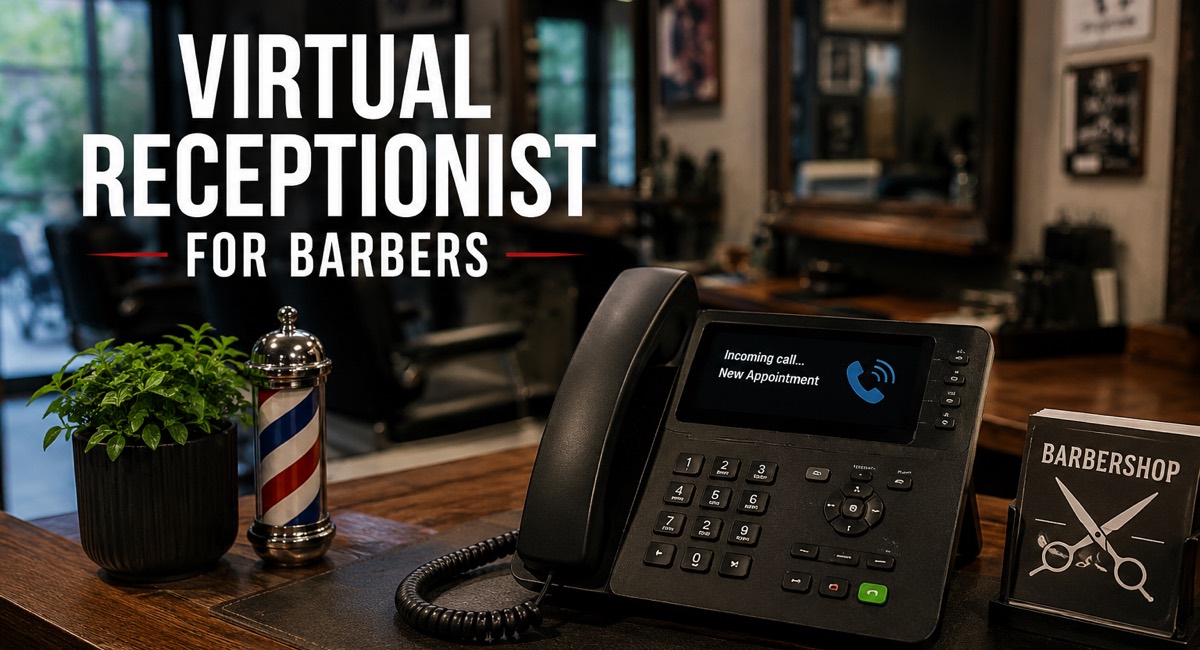
A virtual receptionist is a service that handles incoming business calls without someone sitting at your front desk. Depending on the system, it can answer questions, describe your services, share prices, and help customers schedule appointments.
Unlike a receptionist who works in the shop, an AI-powered system handles routine calls through an automated phone line. You configure it with your opening hours, service menu, prices, and booking rules. When someone calls asking about a skin fade, it answers from the information you gave it.
The important word is routine. These systems are good at the calls that follow a predictable shape, and less good at everything else.
Why Barbershops Need a Virtual Receptionist
Cutting hair is only part of the job. You're also managing appointments, greeting walk-ins, answering pricing questions, and keeping regulars happy. When several customers arrive at once, the phone becomes one more thing competing for your attention.
Letting it ring isn't free either — the caller simply contacts another shop.
Missed calls while serving clients
You're halfway through a detailed fade when the phone starts ringing. You can't stop without interrupting your customer, but the person calling might want an appointment that same afternoon.
If nobody answers, they'll search for another barber. You never find out who it was or what they wanted.
Calls after closing hours
Customers don't only call during business hours. Someone finishing work at seven in the evening might want a cut the next morning.
A properly configured service answers those calls and helps the caller request a time, which is where a lot of booking intent actually arrives. Booking appointments around the clock goes into how to set that up and test it.
How a Virtual Receptionist Works
It starts when a customer calls your number. An AI voice assistant answers, listens to the request, and responds using the shop information and rules you configured.
If the caller asks about a haircut price, it gives the price. If they want an appointment, it checks your calendar and offers real times. Once they pick one, the booking is recorded and the slot is taken.
Answering questions about services and prices
Customers often call with simple questions before choosing a barber: do you do skin fades, beard trims, kids' cuts? What does a cut and beard cost together? Are you open Sunday?
Configure the system with accurate service descriptions, prices, timings and hours, and those callers get a straight answer without you putting down the clippers.
Booking, rescheduling and cancelling
Scheduling gets easier when customers can make changes by phone. A client might need to move a Friday afternoon appointment to Saturday morning. A connected system checks availability, offers alternatives, and updates the booking.
Cancellations matter more than they sound. One that goes through the system frees the slot for someone else, instead of leaving a gap you only discover on the day.
Virtual Receptionist vs Traditional Receptionist
| Virtual receptionist | Traditional receptionist | |
|---|---|---|
| Routine calls and bookings | Handles them | Handles them |
| After-hours coverage | Yes | Only if someone is paid to be there |
| Walk-ins and in-person requests | No | Yes |
| Unusual or sensitive calls | Limited | Yes |
| Cost | Monthly subscription | Wage, plus scheduling |
A human receptionist brings judgement, handles walk-ins, and deals with the calls that don't follow a script. But hiring means wages and rotas, and their availability still has gaps.
A virtual service tends to suit a solo barber or a small shop on a limited budget. A busier business might run both — automation for the routine calls, a person for everything else.
What to Look For in a Virtual Receptionist Service
Not every service does the same things. Judge them on:
- Accurate answers about your services, prices and hours — from your information, not a generic script.
- Real availability. Offering times that don't exist is worse than not answering at all.
- Booking changes, so reschedules and cancellations work by phone.
- Calendar compatibility with what you already use.
- Call records, so you can review what callers actually asked.
- A route to a person for anything the system can't complete.
That last point is the one to press hardest. Ask what happens when it can't answer — the response tells you more than any feature list.
Calendar integration
Check whether the service works with the calendar you already use, and whether it respects your rules for appointment length, working hours, and which services you offer when.
Also confirm whether bookings, cancellations and reschedules update that calendar automatically, or wait for you to approve them. Both are defensible; you just need to know which you're getting.
Pricing, minutes and setup
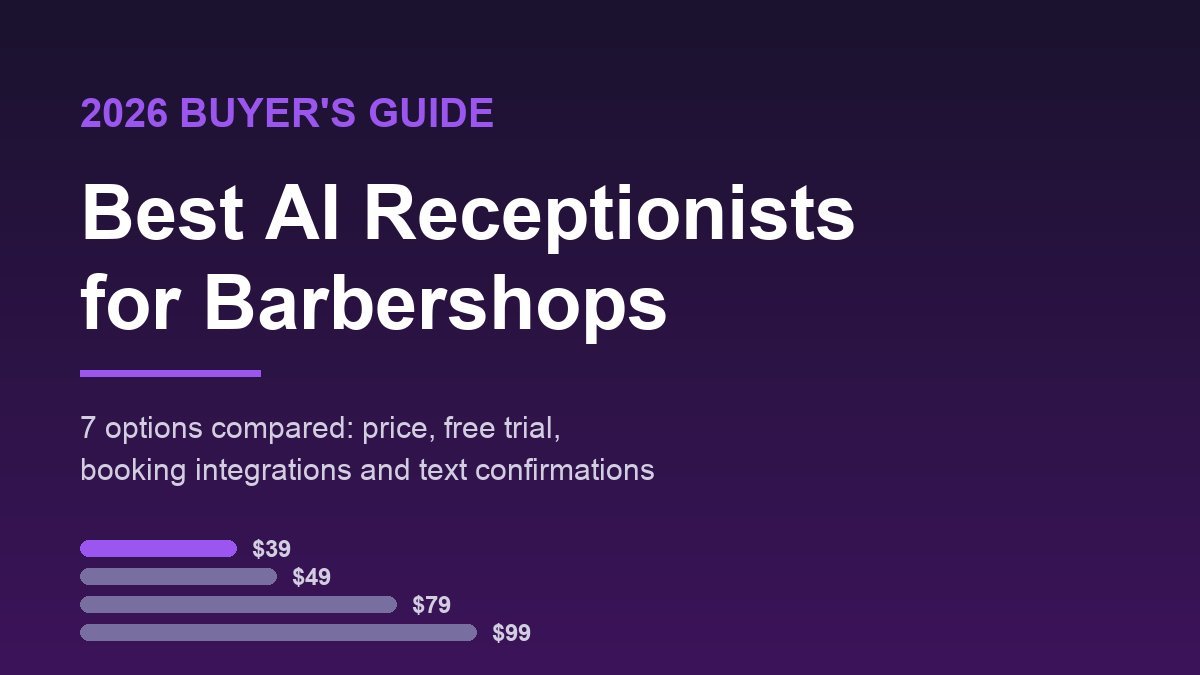
Compare the total cost, not the headline subscription. A cheaper plan may include fewer call minutes or fewer booking features, while a higher tier adds extra phone numbers and more detailed analytics.
Ask how usage beyond the included minutes is charged. Then check how much work setup is — a service that takes an afternoon to configure is a different proposition from one that needs a week.
How BarberReceptionist Helps Barbers Manage Calls
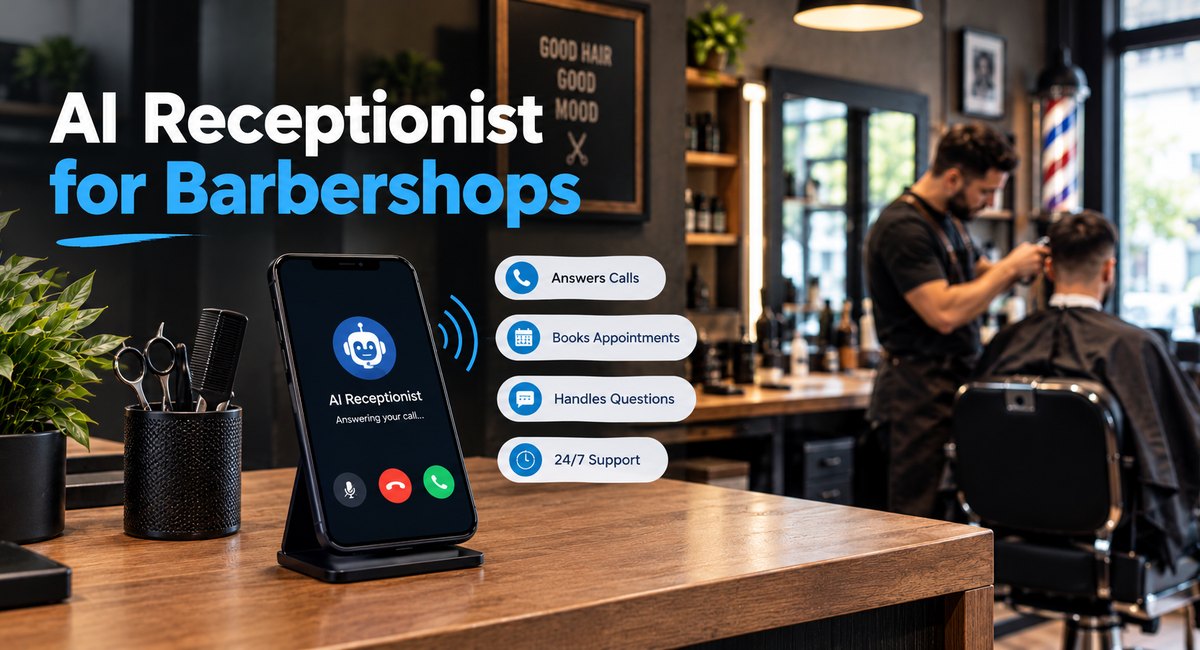
BarberReceptionist is built for exactly this. Its AI receptionist answers calls, explains services and prices from your own list, and books appointments while you stay with the client in your chair.
Bookings go into Google Calendar, so they appear as ordinary events on your phone. It handles availability across multiple barbers, so a regular can ask for whoever usually cuts their hair, and it supports rescheduling and cancelling by phone.
Every plan includes call analytics so you can see what people are actually ringing about. The Pro plan adds up to three AI receptionists and up to three phone numbers, which is the point of moving up from Starter.
You can hear recorded sample calls before talking to anyone — three real shops, three different conversations. New accounts get 15 free minutes with no card required, which is enough to ring it yourself and try the awkward calls.
Is a Virtual Receptionist Worth It for a Small Barbershop?
It depends on three numbers: how many calls you miss, how many of those callers would have booked, and what an appointment is worth to you.
Say you miss 30 calls in a month and one in ten would have booked. That's three appointments. At $25 each, it's $75 of revenue before expenses — which, against a monthly subscription, is close to break-even.
That example is illustrative, not a promise. Run it with your own numbers, because the average ticket is what moves it: at $45 a cut the same three bookings look very different. Add the time saved and the interruptions avoided, then decide.
A shop that takes a handful of calls a week probably doesn't need this. A barber who regularly misses booking requests might. If your phone is quiet, the problem is demand, not call handling — stop losing money on barbershop bookings covers the other levers.
How to Get Started
- Gather your information: services, prices, business hours, and appointment rules.
- Choose the voice and greeting that suit your shop.
- Connect your calendar and set the booking rules your plan supports.
- Sort out the number — a new one, or forward the one your clients already know.
- Test it properly. Ask a price, book an appointment, then move it and cancel it.
- Check the calendar after every test, especially reschedules and cancellations.
A few careful tests catch most problems before a customer does. Accurate information is doing most of the work here — a confident wrong answer is worse than no answer.
Conclusion
Managing the phone while cutting hair is genuinely difficult, and missing calls is normal rather than a failure on your part.
A virtual receptionist answers the routine questions, takes booking requests, and covers the hours you don't work. Whether it earns its keep depends on your call volume, your average ticket, and how many bookings are currently slipping away unseen.
Work out those numbers first. Then try it on your own calls before you commit. See booking around the clock, or the guide to AI phone answering for barbershops for the wider picture.
FAQs
What is a virtual receptionist for barbers?
It is a phone answering service that handles customer calls, answers common questions about services and prices, and takes appointment requests without needing someone at your front desk.
Can a virtual receptionist book barber appointments automatically?
Yes, where it is connected to your booking calendar. It checks genuine availability, helps the caller choose a time, and books according to your scheduling rules.
Can a virtual receptionist answer calls after a barbershop closes?
Yes. After-hours answering covers the evening and early-morning calls that otherwise reach voicemail, which is when a lot of booking intent arrives.
How much does a virtual receptionist cost for a small barbershop?
It varies by provider, plan, included call minutes and features. Compare the total cost including usage beyond your included minutes, not just the headline subscription.
Is a virtual receptionist better than a traditional receptionist?
It depends on your needs. Automation handles routine calls and bookings at any hour, while a human receptionist manages walk-ins and the calls that need judgement.